

MONTEREY, Calif. – In an era of intensifying competition and rapid innovation, the Naval Postgraduate School (NPS) serves as a critical link between advanced education and the operational demands of the U.S. Department of the Navy.
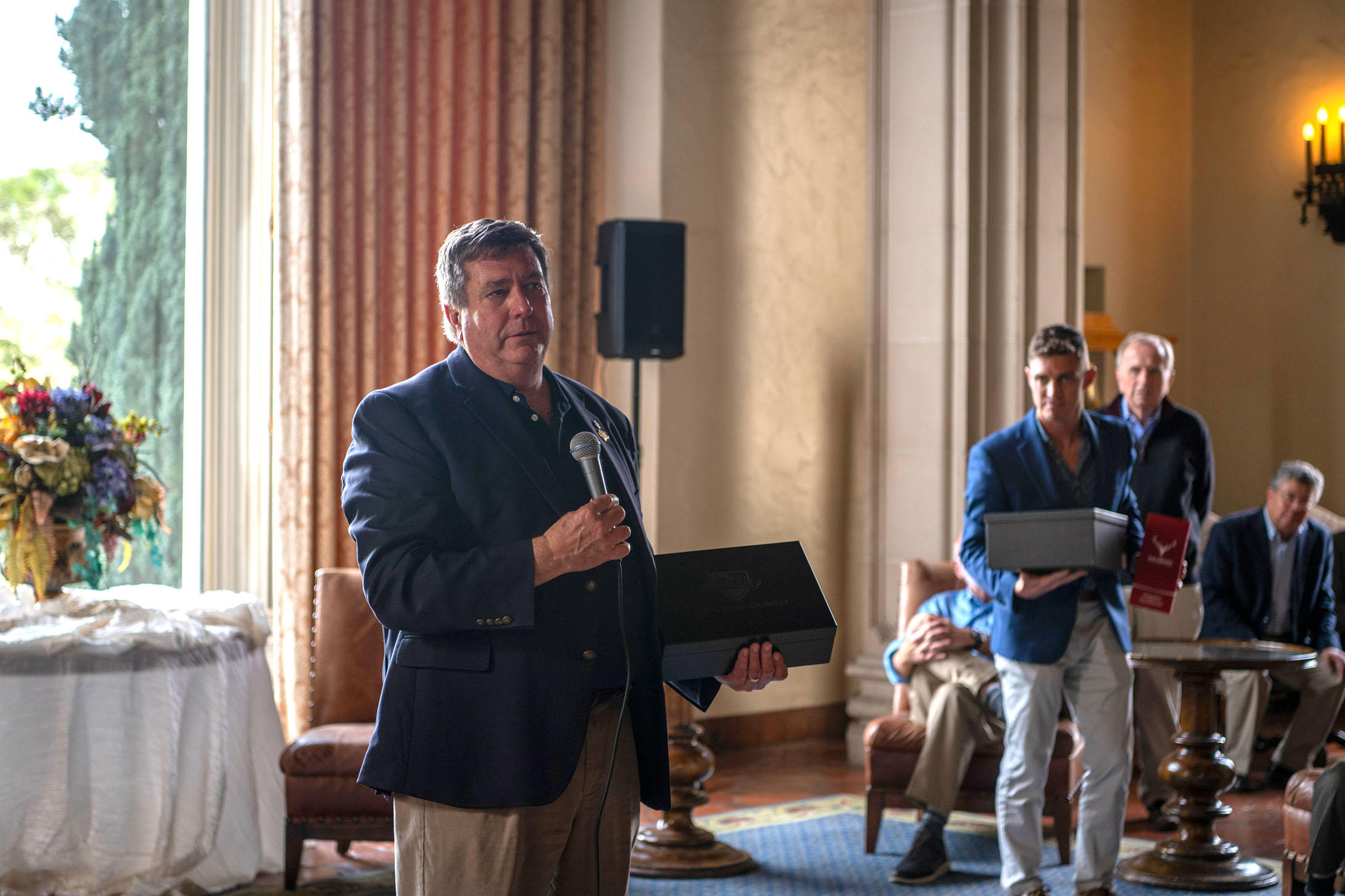
One of NPS’ most powerful forces in keeping that connection grounded in current naval warfighting, while maintaining a keen eye toward the future, has been retired U.S. Navy Capt. Jeffrey E. Kline, whose recent retirement from NPS brings his combined service — on active duty and in teaching at NPS — to more than 47 years!
A former surface warfare officer, commanding officer, and senior naval analyst, Kline recently celebrated his retirement from a distinguished career in academia. As a longtime professor of the practice in NPS’ operations research program, Kline has played a leading role in keeping the institution and its warrior-scholar students firmly focused on current and future warfighting challenges.
“Few individuals have had a greater impact on strengthening the connection between the fleet and advanced education, applied research, and mission-driven innovation at NPS than Jeff Kline,” said NPS president retired U.S. Navy Vice Adm. Ann Rondeau. “Through decades of service as a naval officer, scholar, mentor and innovator, he helped shape generations of warrior-scholars while ensuring NPS remained firmly connected to the real challenges facing the naval services. His leadership of the Warfare Innovation Continuum and his commitment to students and rigorous analysis to operational problems leave a lasting legacy not only at NPS, but across the Navy and Marine Corps.”
Rondeau drew parallels on Kline’s impact to the late NPS professor emeritus, retired U.S. Navy Capt. Wayne P. Hughes, author of the highly regarded book, Fleet Tactics.
“Hughes often emphasized that sound leadership rests in preparing leaders to make decisive, informed choices under uncertainty—an ethos Jeff Kline exemplified throughout his career, empowering students and colleagues alike to think critically, act boldly, and lead with purpose,” Rondeau said.
From his early sea tours aboard ships like USS Moosbrugger (DD-980), to his command of USS Cushing (DD-985), to his senior staff roles supporting fleet operations, Kline developed a deep understanding of the complexity and uncertainty inherent in naval warfare. That experience has shaped how he approached educating students at NPS.
“Academic work is important,” Kline said. “But if it’s not tied to real operational problems, it doesn’t help the fleet when it matters most.”
At NPS, that philosophy translates into a deliberate effort to align research and education with the needs of operational commanders, today and into the future. And one of the most effective mechanisms exemplifying that philosophy is the Warfare Innovation Continuum (WIC).
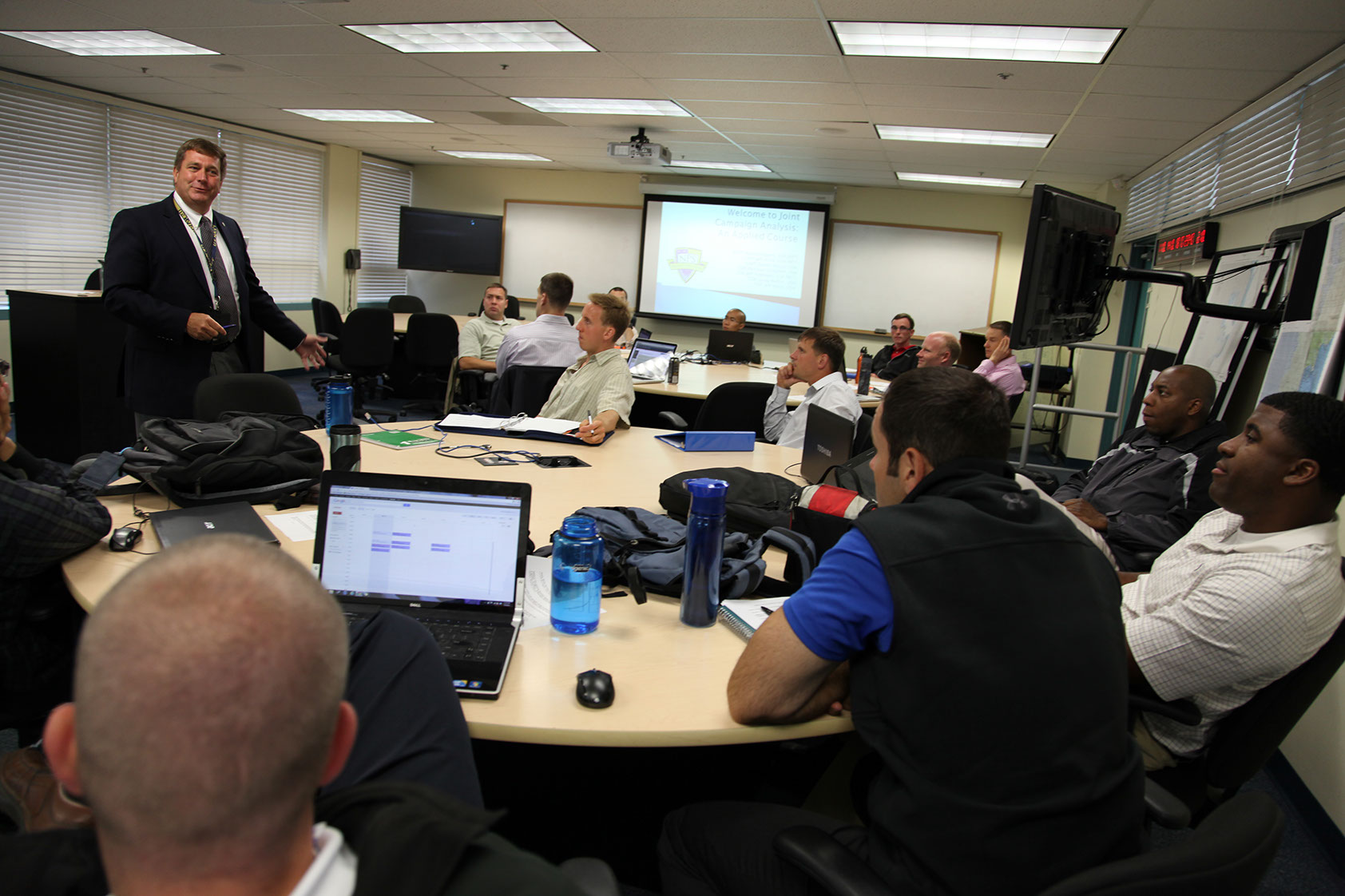
Envisioned by Kline in 2009, the WIC is a 12- to 18-month, campus-wide initiative created to bring students, faculty, and Navy stakeholders together around shared operational challenges. Through a series of workshops, seminars, wargames, capstone projects, thesis research and field experimentation, all built around a central operational theme, the WIC serves as an innovation engine that leverages NPS’ strength — operationally experienced students and defense-expert faculty — to address complex fleet issues and capitalize on emerging technologies.
“When we brought together participating faculty for the first WIC, we intended to provide our officers a real-world, timely, relevant issue to apply their graduate skills,” Kline said. “The WIC does this, but is now also an important venue for the Navy and Marine Corps to leverage the Naval Postgraduate School’s academic and technical talent.”
The process begins each fall with a large workshop that brings together industry partners, Navy stakeholders, and NPS scholars to begin concept development and technical exploration on topics selected by Navy leadership.
Lyla Englehorn, concepts branch lead in NPS’ Office of Warfare Studies, has worked closely with Kline through the WIC’s execution. The program integrates research, education, and experimentation, providing a venue for participants to explore emerging technologies and concepts in realistic scenarios and present their findings directly to Navy leadership.
“The Warfare Innovation Continuum was the brainchild of Jeff Kline,” Englehorn said. “He saw great value in examining the same complex military challenge from a variety of lenses, and immersing students in issues that naval leadership found important.”
“The attribute that sets Professor Kline apart is his ability to see connections between challenges and ideas, and to bring together disparate efforts in pursuit of novel solutions,” she added. “He is always open to non-traditional ideas and approaches and willing to test a better path if the evidence supports it.”
Over time, the WIC has demonstrated measurable impact on Navy thinking and doctrine. Kline noted that concepts explored through WIC efforts, including distributed maritime operations and contested logistics, later emerged as formal Navy operating concepts. The continuum’s success is also rooted in its collaborative framework, which brings together diverse perspectives across the institution.
“Collaboration was key to the Warfare Innovation Continuum framework, as envisioned, designed and executed by Kline,” said Englehorn. “The vast variety of inputs from faculty and students resulted in a more robust analysis of a key operational challenge than one scholar or group could produce alone.”
The goal, Kline said, is not just to generate ideas, but to shape how students think about warfighting. He says the real value lies in cultivating officers who approach problems differently, are able to translate research into action, and ultimately make better decisions under pressure.
“War is not a controlled experiment,” Kline said. “It’s a dynamic, adaptive competition. Our job is to prepare leaders who can operate in that environment.”
For Kline, leading the continuum was both professionally and personally rewarding.
“It kept me in tune with emerging challenges in the maritime domain and gave me the opportunity to contribute directly to the Navy’s future force design efforts,” Kline said. “Solutions to complex problems are normally found not in one concept or technology, but in a synthesis of several.”
Maintaining a deep understanding of naval warfighting challenges, as well as a strong feedback loop between NPS and the fleet, has been a central theme of Kline’s work. Research topics are informed by operational needs, and student work is often requested by Navy staffs and commands, evidence that the institution’s output is making an impact.
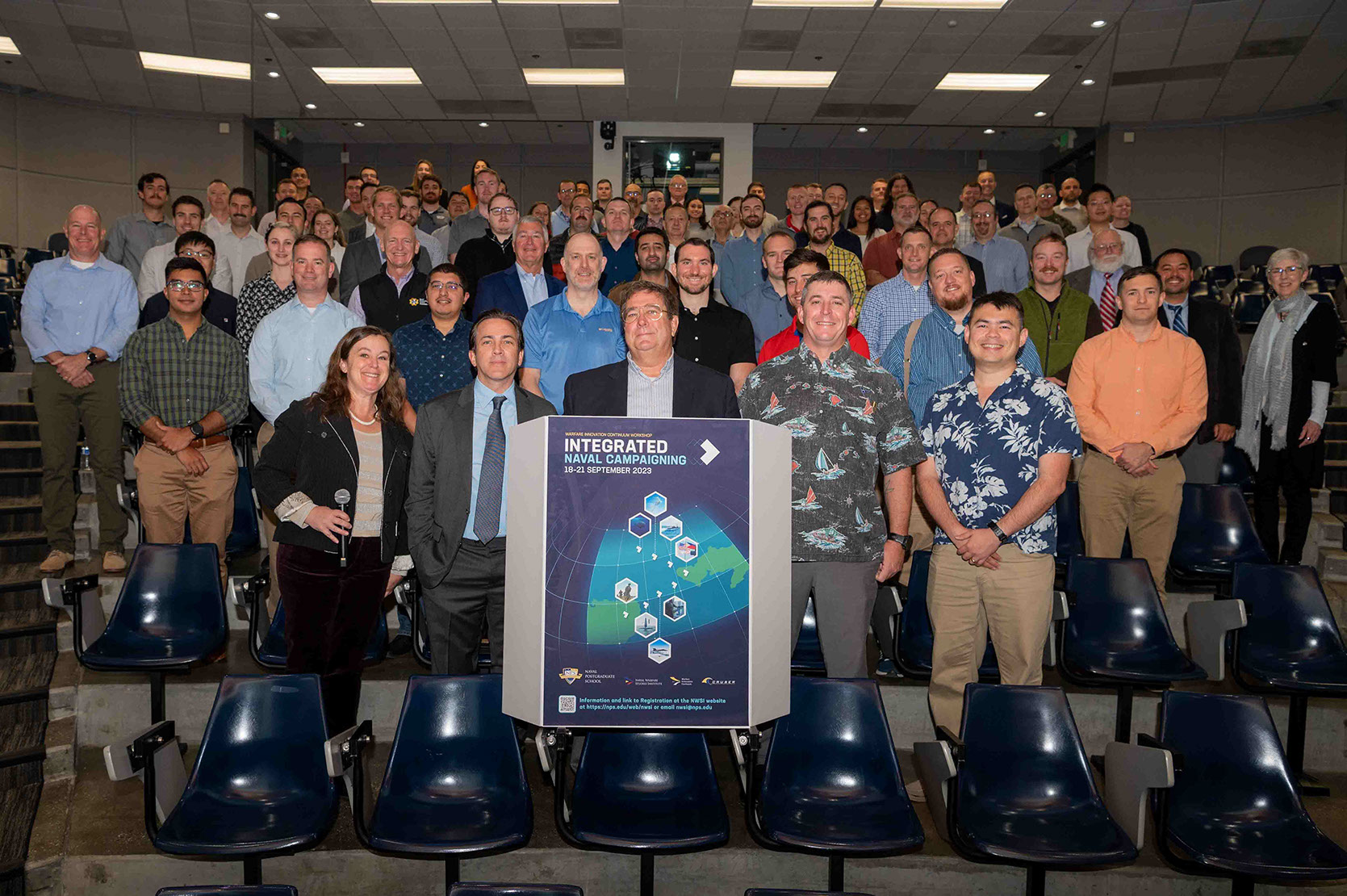
Kline’s impact on the campus and its students extended well beyond the WIC, such as his leadership as chair of the Systems Engineering Analysis program, a joint curriculum teaching traditional systems engineering theory and practice requiring students to work across disciplines to engage problems of interest to the Navy and DOW.
“Our responsibility is to ensure students are working on problems the Navy actually cares about,” Kline emphasized. “That’s how you make education matter to our professional officers and their services.”
Kline brought this same perspective to strategic advisory roles, including service on the Chief of Naval Operations Fleet Design Advisory Panel, where he helped inform the Navy’s approach to future force structure.
“Fleet design isn’t theoretical,” Kline noted. “It’s about how you intend to fight, and whether your force can actually execute that vision.”
His contributions also extended to national-level studies with the National Research Council, where he co-authored reports on issues such as capability surprise and maritime threats, work that directly informed senior Navy decision-makers.
Beyond the classroom, Kline led major initiatives that reinforced the connection between research and operational impact. As the first director of the Consortium for Robotics and Unmanned Systems Education and Research (CRUSER), he established an international network focused on integrating unmanned systems into naval operations, addressing everything from tactics to ethics. He also directed the Maritime Defense and Security Research Program, a nationwide effort tackling challenges in port and maritime security.
But Kline’s influence is perhaps most visible in the classroom, where he has spent years teaching courses in campaign analysis, systems analysis and naval tactics. His courses are designed not just to teach analytical methods, but to prepare officers for the realities of decision-making in conflict. That philosophy is embedded in programs he helped design, including interdisciplinary case studies and curricula that require students to integrate technical expertise with operational insight.
Through decades of service, education, and leadership, Kline has helped define a model for how academic institutions can advance warfighting effectiveness. His work demonstrates that rigorous academic research and operational relevance are not competing priorities, they are mutually reinforcing.
At NPS, that principle continues to guide efforts to prepare the next generation of naval leaders.
“The measure of success,” Kline said, “is whether what we do here makes the fleet better prepared to fight and win.”
As the Navy confronts an increasingly complex and contested global environment, the focus on real warfighting problems ensures NPS remains not just a place of learning, but a critical contributor to naval warfighting and the security of the nation.